Archive | Argentina

Tags: , , , , , , ,

Argentina Wine Tours – Pickle Your Liver at Mendoza, Argentina

Posted on 11 September 2009 by anthony

Argentina is a magnificent country – and when you are there, you should check out many of the Argentina Wine Tours that are held in their wine growing regions.

You can judge how ingrained a wine culture is in a country by simply buying the cheapest bottle of plonk to test how good it is.  I bought one for about $AUD0.80 and it was really good!  If I bought alcohol for that price in Australia, it would be classed as methylated spirits!

The Mendoza region, not far from the Chile border, contains around 800 wineries (yes, that’s right, 800) and is a good place to undertake an Argentina Wine Tour.  I tried to visit them all, but I could only manage two.

Wines from Mendoza usually specialise in the red varieties, including the supberb and velvety Malbec (wash down a big steak with one of these).  The San Juan region to the north specialises in white varieties.

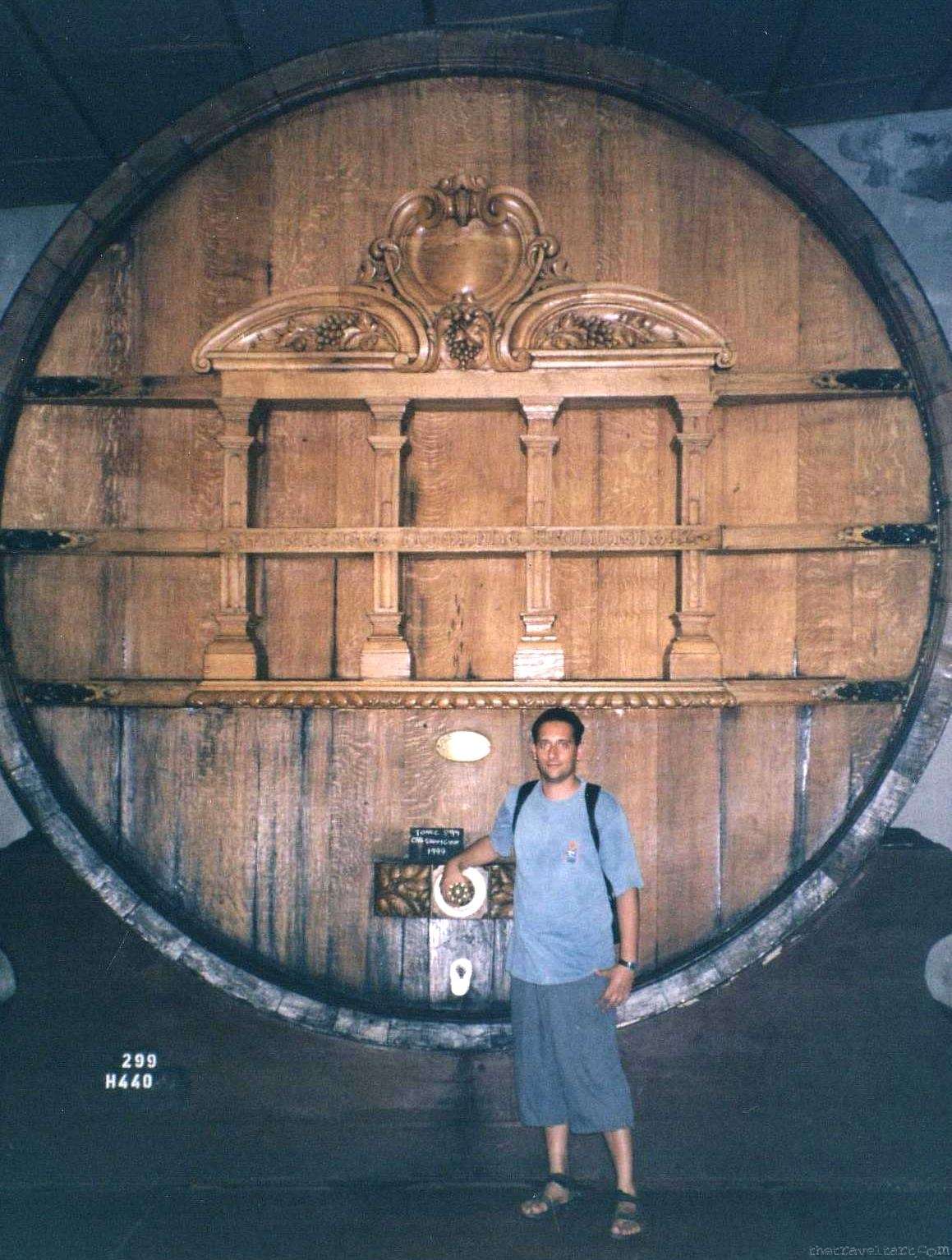
But check out the size of this wine barrel I witnessed on an Argentina Wine Tour!  I felt like placing my mouth underneath the tap Homer Simpson style and taking a few gulps!

wine barrel 773x1024 Argentina Wine Tours   Pickle Your Liver at Mendoza, Argentina

‘Yes, I’ll take this one!’

If you want to find out more about the magnificent Argentina Wine, check out Wine Routes of Argentina and The Wines of Argentina, Chile and Latin America.

Other things to do in Argentina after pickling your liver with some fantastic wine drunk on an Argentina Wine Tour - check out the state of their banks, some Beaver Dams, and scoff down a few tonnes of the Best Steak ever!

  • Share/Bookmark

Comments (6)

Tags: , , , , , , , ,

Falkland Islands/Islas Malvinas/Malvinas Islands Memorial – The Ultimate in Irony

Posted on 15 July 2009 by anthony

The Falkland Islands/Islas Malvinas/Malvinas Islands or whatever you want to call them.

They are located off the coast of Argentina in the South Atlantic Ocean.  Malvinas Islands

Some of us remember way back in the early 1980’s, the scuffle that was the Falklands War.  I was only a kid then, and I vaguely remember watching some war ships fire their rounds on TV during the news updates.

Basically, the story is that Argentina invades the Falkland Islands, which are controlled under the United Kingdom.  The British PM at the time, Margaret ‘The Iron Lady’ Thatcher, did not like that and decided to take them back.  After a short-ish fight (a whole 74 days), the English win the conflict.  Malvinas Islands

You can read more about the history of this conflict at the Falklands War page at Wikipedia, or in this book for more detail.

Even today, maps produced in Argentina show the Falkland Islands (U.K.) as the Islas Malvinas (Arg).

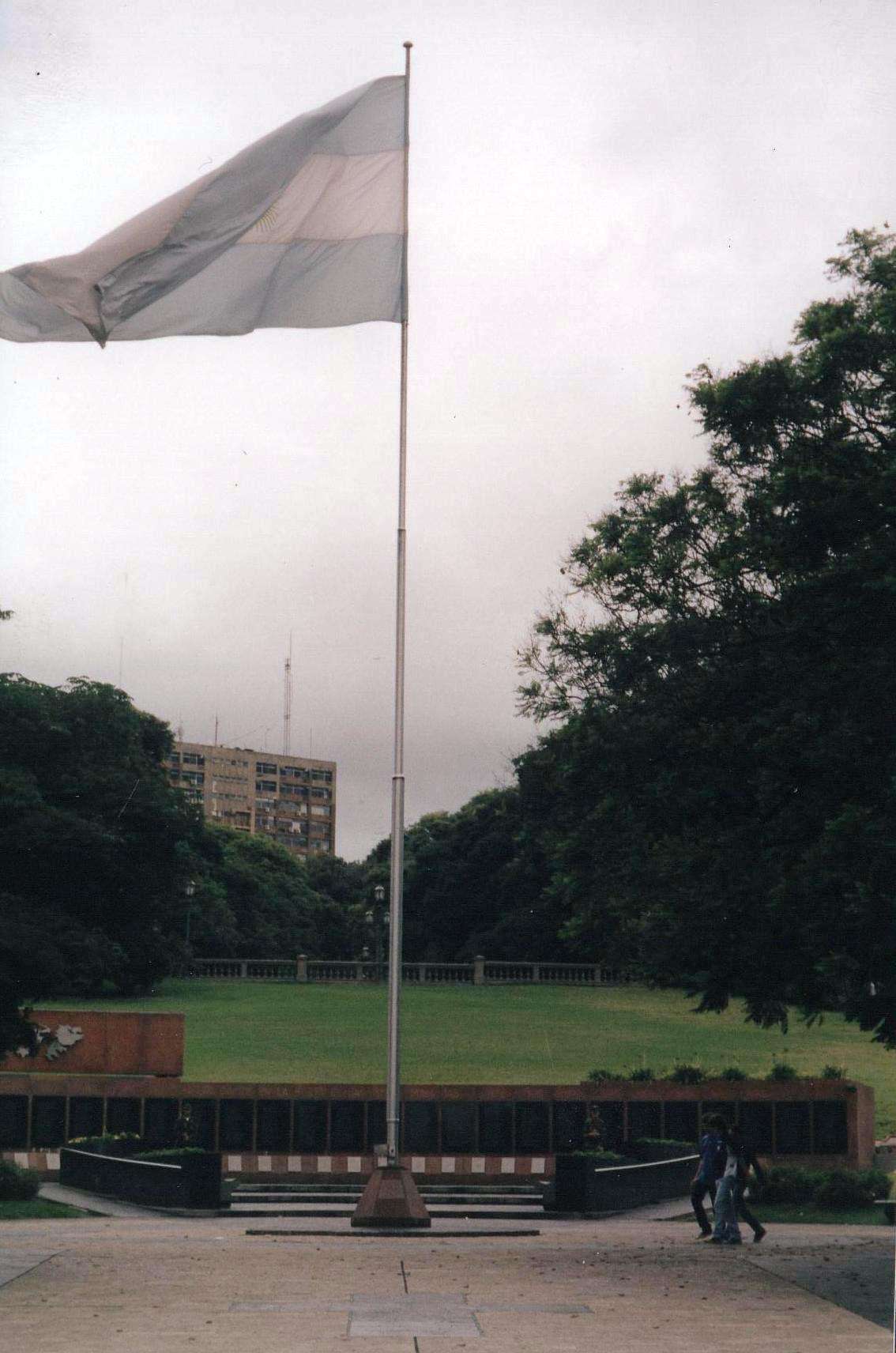
Argentina lost a few hundred men during the conflict – and there is a big memorial in Buenos Aires that commemorates the fallen there.

I’ve included a picture of the memorial below. Malvinas Islands

Islas Malvinas Memorial

What makes this memorial ironic is that the Argentine Falkland Islands/Islas Malvinas memorial to those who died is literally situated across the road from an English Clock Tower – a gift from the English to Argentina in the 1800s. Malvinas Islands

I took this photo, standing in front of the memorial and this sight was located directly ahead: Malvinas Islands

English Clock Tower

I wanted to point out this irony to the two armed guards who were stiffly standing next to the memorial, but realised from my Kosovo experience they had big guns I didn’t possess.  Malvinas Islands

Other things to do in Argentina – throw bricks at a bank, check out Beaver Dams in Tierra Del Fuego, and devour the Best Steak everytime.

  • Share/Bookmark

Comments (1)

Tags: , , , , , , , , ,

See Beaver Dams – In South America

Posted on 03 June 2009 by anthony

Beaver Dams. They’re amazing feats of engineering.  But not in a foreign environment.

Like Australia, Argentina hasn’t learnt the lesson of not deliberately introducing animals from other continents that might cause an environmental problem.

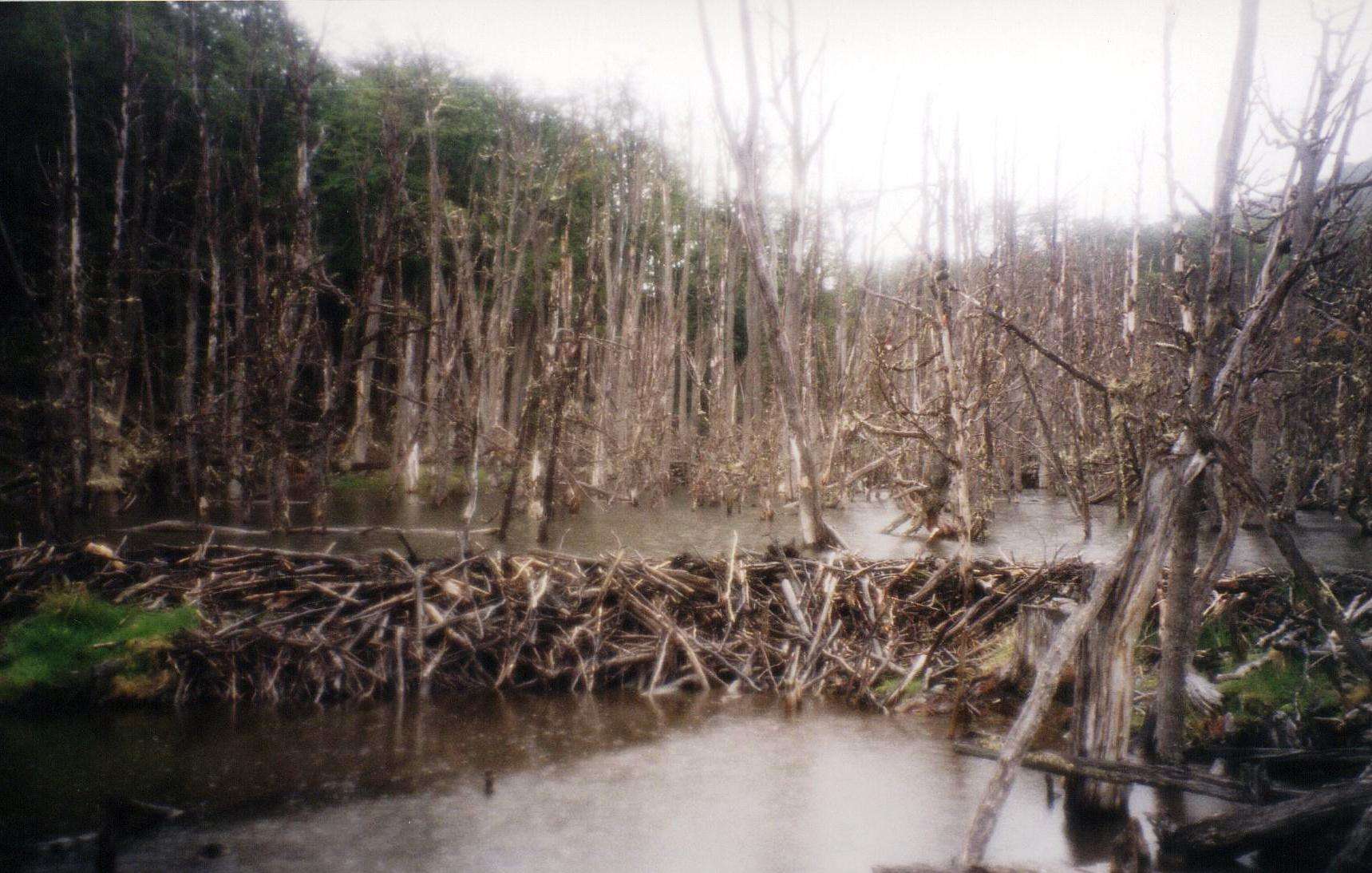
Check out the photo below – it’s of a Beaver Dam.  It looks like any other Beaver Dam within North America.  However, this Beaver Dam is located in the Tierra del Fuego region of Argentina, right at the southernmost tip of South America, in a National Park!

beaver dam 2 1024x651 See Beaver Dams   In South America

However, Beavers are a North American species!

Beavers were brought to Tierra del Fuego as a potential source of income via their pelts, but, with no predators and no competition, had become completely feral.

This was probably because most people preferred buying a leather jacket made from high quality bovine carcass caused by Argentina’s meat addiction (See Don’t Cry For Meat Argentina), than one made from a somewhat-unmarketable feral Beaver.

Hence, the Parque Nacional Tierra del Fuego inherited a large network of Beaver Dams.  Whilst Beaver Dams are an impressive natural engineering feat of stick inter-twining from the animal kingdom, the Beavers had successfully drowned large areas of trees resulting in a juxtaposition of lush green, wind-blown sub-Antarctic vegetation, dissected by relatively barren lakes of foliage-free tree stumps.

So, these ecological stuff ups are pretty universal then!

You can learn more about how Beavers build their damns from this Discovery Channel Feature – Beavers: Dam It All Anyway.

Other things to do in Argentina – check out the tarnished reputation of their banks, which is worse than those of US banks in this current Global Finanical Crisis.

One day, I hope to see Beaver Dams in their natural environment in North America.

  • Share/Bookmark

Comments (7)

Tags: , , , , , , , ,

Best Steak: Don’t Cry For Meat… Argentina…

Posted on 21 April 2009 by anthony

The Best Steak I’ve ever had has been in Argentina.

WARNING: Vegetarians, please stop reading now!

steak Best Steak: Dont Cry For Meat... Argentina...

If you’re a carnivore, and you’re after the Best Steak in the world, then Argentina is the place for you.

Check out the picture – I’m holding an entire set of cow ribs with my mate, the Parilla chef.

Argentines eat truckloads of meat, resembling an evolutionary throwback to some sort of caveman diet.  They eat on average 60 kilograms of beef a year per capita (compared to about 30 kilograms for Australians), working out at 165 grams of beef every single bloody day.  Remember, this figure DOES NOT include chicken or lamb!

Remarkably, meat ingestion has decreased over the years from some astronomical level.  Meat is always cooked the Argentine way – the Argentine barbecue, or the Asador. Salads are an optional extra, always served first before the main meal and eaten on their own, so they do not spoil the immaculate presentation of char-grilled protein on a plate that can barely contain it.

The sizes of the steaks were enormous and I reckon it took me at least a week to crap out each steak. To satisfy my rabid curiosity, I asked a waiter in a parilla steak house just how much steak his restaurant went through a day.

¿Cuantos kilos carnes un dia?’ I asked in rough-as-guts Spanish.

His answer was ‘tres cientos’ – Three Hundred!

Judging by the serious look on his face, he wasn’t joking.  If he spoke English, I’m sure he would have said ‘And how would you like your entire cow cooked, Señor Gringo?’

So let me work this out.  If one restaurant in Argentina char-grills over two tonnes (2.1, to be precise) of steak per week, this accumulates to 110 tonnes of steak a year.   Just one steak restaurant in Argentina, of which there must be millions.  I was flabbergasted when I contemplated how many dead cows that translated to.

Once the bovine beasts reach cow heaven, their presence is not lost on this earth, as the enormous steak diet translates into a colossal range of leather goods for sale.  I concluded from this large collection of evidence there must be some rough-looking colons in Argentina and stomach surgeons were in short supply.

I understood the steak addiction though, as the beef was outstanding – it was the best steak I’d ever devoured. Every single time.  It was the way meat was cooked that contributed to the flavour.  Steak is cooked over hot burning wood coals, creating an appetizing taste.  When served, plates are devoid of any other food material, creating a contrast of flame-roasted tenderloin against barely-visible edge of white serving plate. This created a challenge – you against the steak.  If there was any resemblance of meat left on the plate, the meat won.  It never won with me, but it was a close call some days.

However, the parilla wasn’t solely devoted to bife de chorizo (sirloin) and bife de lomo (tenderloin) steak.  Whole lamb and chicken was split into flat lamb and flat chicken, roasted on open fires burning with a gentle wood flame.

Parilla chefs left the roasting carcass on the slow cooking fire from mid-afternoon, ready for carnivores that night.  For some astounding reason, chefs cook meat at the shite end of the protein spectrum – that offal crap, including morcilla (black pudding, or blood sausage), chinchulines (tripe) and riñones (kidneys).

Regardless, if you spend lunch or dinner at a parilla, you definitely need a siesta to digest the 900 gram monster you have just devoured.  Sometimes, you might need a siesta worthy of hibernation.

If I’ve made you ravenous, check out Seven Fires: Grilling the Argentine Way.

Salud!  And enjoy the Best Steak ever!

  • Share/Bookmark

Comments (4)

Tags: , , , , , , ,

Global Financial Crisis – If you thought US Banks had an image problem..

Posted on 04 April 2009 by anthony

Since the Global Financial Crisis started, we’ve heard the doomsayers belting out that the sky is falling in.

But it’s nothing compared to the meltdown that happened in Argentina in 2001.  Have a look at the photo below – what do you notice?

banks Global Financial Crisis   If you thought US Banks had an image problem..

This bank comes with a literal ‘iron clad’ guarantee, that is, it’s completely covered in steel cladding!

At the moment, banks in the United States a copping a caning for dishing out dodgy home loans people couldn’t afford to pay back. And the term Global Financial Crisis was born.

But it’s nothing compared to the woes of the financial system in Argentina.

During the economic crash of late 2001, hazy Argentines woke up one morning without any savings.  Argentina defaulted on a World Bank loan, and the government decided the easiest way to make payment was eradicating the hard earned investments of normal people.

Of course, the natural reaction to this crazy decision was trashing anything bank or government related.  The solution to this sudden increase of bank bashing was cladding their now shattered windows with enormous 10 millimetre steel plates to reduce vandalism costs.  However, there was still a legacy of pounded metal from plentiful projectiles such as bricks, steel and probably bank managers.

Graffiti had the remarkable groundhog day-like ability to reappear on every bank in the central business district of Buenos Aires, as if it was incorporated into the Porteño way of life.

Graffiti was sprayed in both Spanish and English, such as ‘DEATH TO THE BANKS’, ‘MUERTE DEL SISTEMA FINANCIERO’ (Death of the Financial System),  and other positive feedback bypassing the respective bank’s websites.  An example of this fantastic feedback is shown below.

theives 1024x772 Global Financial Crisis   If you thought US Banks had an image problem..

However, one positive effect of the economic crash was the sudden surge of careers available in graffiti removal.  During this turmoil, Argentina also held the dubious world record of appointing and firing five Presidentes in two weeks at the height of this tumultuous period.

Puts things into perspective I guess about the Global Financial Crisis!

If this has stirred your curiousity, check out Freefall: America, Free Markets, and the Sinking of the World Economy.

Related Posts with Thumbnails
  • Share/Bookmark

Comments (1)

Photos from our Flickr stream

See all photos

Copy Protected by Chetan's WP-CopyProtect.