
Actually, I was bitten by the travel bug in Kosovo, in the former Yugoslavia during April, 2001. Why I ended up in a war-torn, United Nations soldier/peacekeeper-infested area (all 45,000 of them) as my first venture outside of Australasia is beyond me.But I loved every single second of it – and I went there for work!
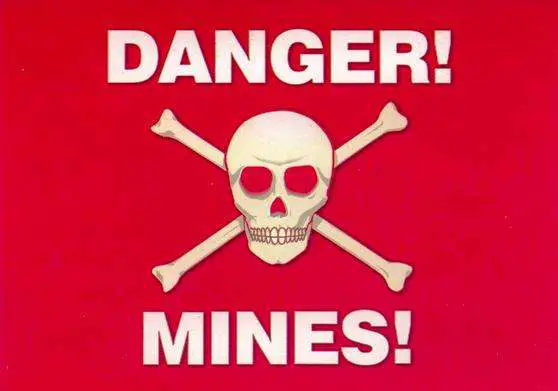
Whilst it is a place most people know about for the wrong reasons, its publicity factor punches well above its weight division for a piece of real estate only 150 kilometres long by 150 kilometres wide. Unfortunately, large parts of Kosovo were littered with cluster bombs when NATO decided to kick out Slobodan Milosovic’s forces – making some tracts of land a great place to lose a limb.
The situation is stable now (that is, no one hears about Kosovo in the news anymore), but back in 2001, things were a bit dicey. There were numerous United Nations tanks like this one patrolling the streets. I’m surprised I didn’t have big guns pointed at me when I took this photo.
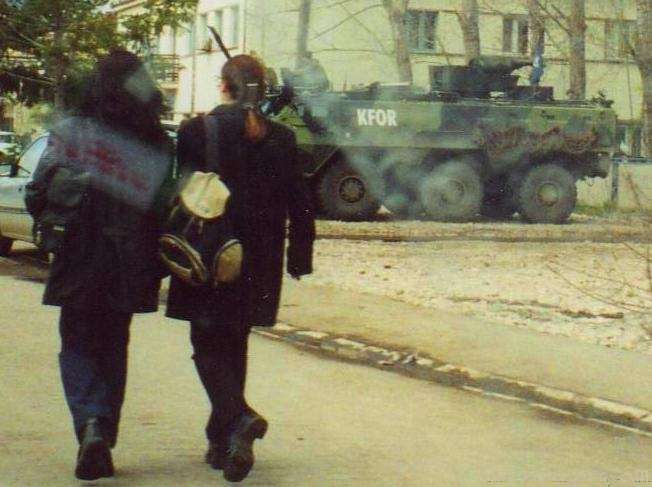
The Kosovo Landscape
And there were loads of blown up houses. Actually, make that blown up villages. I struggled to find the sense of this, but I could not understand how human beings could do this to each other. I’m not getting involved in the politics – this is what it is. The photos below speak for themselves. This is the result of closing all the windows, placing a lit candle in the ceiling, and turning on the gas in the kitchen.
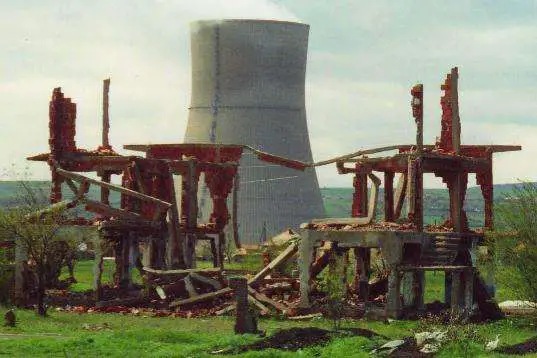
This photo gives the term ‘cavity brick’ a whole new meaning…
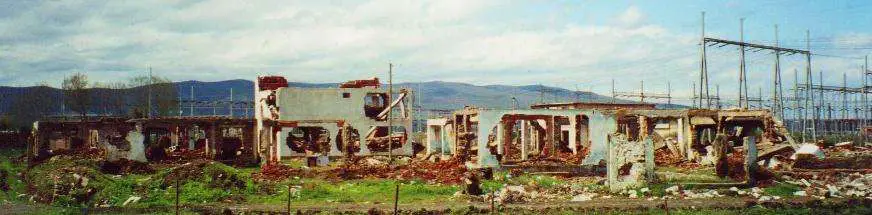
In reality, whilst this may be hard to believe, it was pretty safe in Kosovo. I met great people from both Serbian and Albanian communities there, but it was sad to observe how people lived there.
Ironically, the most dangerous thing I came across in Kosovo was a substance called Rakija. It’s a home-made rocket fuel-like spirit thinly disguised as a drinkable alcohol – it reaches the methylated spirits end of the alcohol spectrum.
One can feel their entire body warm up from the inside out after only one shot of the lethal stuff.I am sure I sensed it strip an essential layer of lipids from my stomach lining. Rakija is distilled from fermented plums and surely must be the staple diet of many Kosovars.
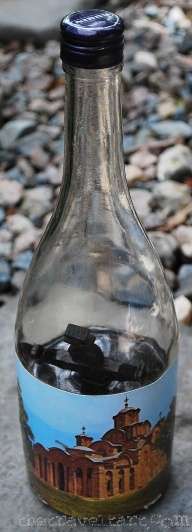
I still possess a sacred bottle of Rakija that I purchased from Kosovo (see to the left).Not surprisingly, it still has the urine coloured Rakija contained within it.The bottle screams character because the Rakija is contained within an old wine bottle that had the bottom cut off to have a wooden cross inserted and then the piece of glass glued back on again.
The crucifix (devoid of a Jesus) floats around in the Rakija and there is a faded photo of the monastery stuck on the bottle which boldly states where this bottle originates.This bottle gives the term ‘home brew’ a whole new meaning.
See what I mean?
I think my time in Kosovo developed a perverse taste for places that most package tourists would avoid like the plague.I probably was a complete nutter for going to Kosovo, but the travel bug had definitely stuck its fangs into my rapidly expanding travel conscience.I loved every minute.
Even if the only word I had learned during my stay in Kosovo was Rakija.
This blog post is my entry into the Trip Wolf Bloggers Competition!
More Kosovo Stuff
You can read more about Kosovo at Peace at Any Price: How the World Failed Kosovo and Kosovo: What Everyone Needs to Know.

So, what did you particularly like about Kosovo, apart from people and booze? Why should we go there? What kind of place is it to visit?
Hi Margaret, thanks for your comment. As mentioned in the posting, I haven’t been there since 2001, and that was only two years after the mess started. From what I hear though, it has changed somewhat – there are much less NATO troops (under 10000 now or so), and like I mentioned, there’s not much news about the place anymore. There are some nice places to visit there – for example, Prizren, near the Macedonian border, is a really nice town. But for me, the people there were great, and made my time memorable. I would like to go back one day and re-visit the place to see the changes. Is there anyone out there who have recently visited who can provide some on the ground feedback?
Kosova is much different now than it was in 2001 but still even then, how many people you know that stepped on mines or were robbed or were killed? The only danger facing you were the traffic accidents. That department has improved much more as well. So yeah you might have been brave in taking the plunge despite the official alert level but once in Kosova it was no adventure.
Ari’s last blog post..Kosovo grid operator picks Areva T&D to install national dispatching system
Thanks Ari for the comment – I bet it’s much different, see my previous response to Margaret.
My dad went to Bosnia on a tour of duty (with Canada) years and years ago and I’ve been obsessed with visiting ever since. The pictures he brought back looked nothing like a war zone (though the highway sign he brought back riddled with bullet holes did). I hear that it is a much safer place to be now, and still just as beautiful but ignored by tourists and travellers alike.
Thanks for a great post!
1002things’s last blog post..Monday’s Picture of the Week
This part of Europe was once such a popular tourist destination so it’s such a shame to see how the brutal war affected it. It’s nice to know that travelers are taking the time to visit Kosovo again and this will no doubt help with the future of the country but as seen in the pictures there is a long way to go yet.
I like the part about the Rakija drink, it seems like every country I have visited have their own ”Hooch”; the Japanese have the wonderful Saki and I recently discovered a tasty brew in Thailand called Ya Dong.
I would also like to ask Anthony what the tourist figures are like nowadays and how many actual visitors/travelers he encountered during his trip.
Kosovo really doesn’t look like a happy place to be in. I really hope that the problems there slowly sort themselves out as it slowly looks like it’s picking up since your time there in 2001. It’s not a place you hear as much of these days either.
I think things have improved a lot, I’d like to go back and check it out!
I have been a video about this place.. brrrr… horror!
Amazing fotos,
i live in Croatia which is pretty close to Kosovo, i still didnt manage to go and am not sure if really would like to take my kids to see something like that. Anyway the “danger mine” sign i also see here, especially in the estern part of the country, if you go on the small roads in that part of the country you can also find used to be villages.
Morten
This was in 2001, so I think things have settled down a bit there! At the time, I never felt threatened, even though some of the images may suggest otherwise!
by the way is just love your “beer index”
Are the prices you mention bar prices?
Those prices are whatever I could get my hands on – either bar prices or in a local store!
Nasty to see people killing other people and bombed homes
Im sure before all the violence it would have been a beautiful place – has it returned to its former glory?
Haven’t been back but would like to see what’s changed.