
Bert Hinkler is one of those understated people who accomplishes big things, like Burt Munro who was portrayed in The World’s Fastest Indian. His name will be forever written into Aviation History.
He was the first person to fly solo from England to Australia, and to the first to fly solo across the southern Atlantic Ocean. And it was in a bucket of bolts like this:
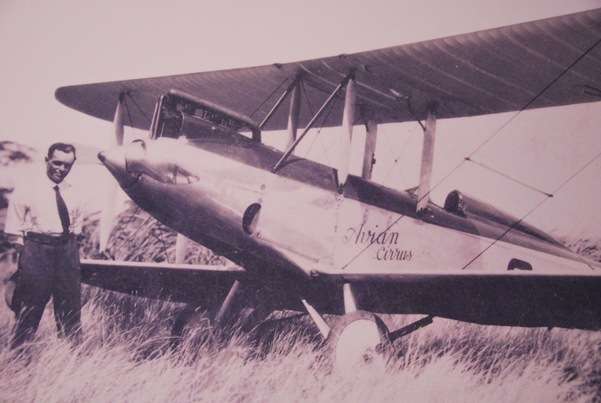
He may have been as ‘mad as a cut snake’, but he was a visionary – he commented that You know, one day, people will fly by night and use the daylight for sightseeing.


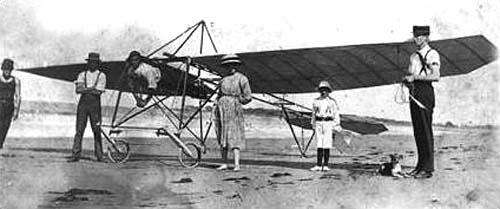
However, one thing that struck me about visiting the Hinkler Hall of Aviation in Bundaberg (in the state of Queensland, Australia) was how Bert Hinkler crafted his trade – in a home made glider that makes the modern day craze of planking in dangerous places look pissweak!
That’s right, he built this glider below and used to do test runs along Mon Repos Beach. If that was done today, it would almost be eligible as a stunt on Jackass!
Aviation History Lesson – Flying Solo From England to Australia
Also back in his days, navigation was pretty rudimentary. There were no iPhones with GPS or anything fancy like that. No, there were only strip maps! If you were lucky!
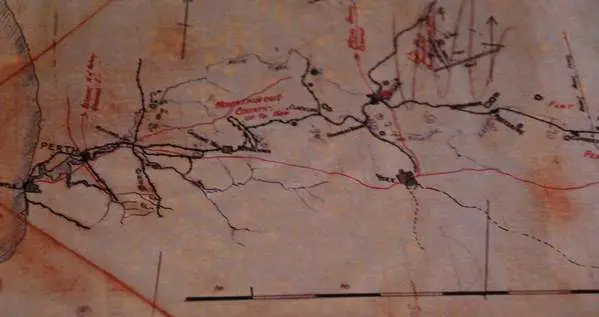
Basically, try flying by yourself whilst looking down at a map that’s about to blow out of your hands, trying to find landmarks on the ground that match whatever is scribbled on a piece of paper! Now that’s adventure!
Unfortunately, Bert Hinkler died in his early 40s whilst attempting another England to Australia flight in 1933, when his plane crashed in Northern Italy. He was buried in Florence and is forever ingrained in Australian and world aviation history.
Aviation History Irony
However there is a touch of irony that relates Bert Hinkler and the Space Shuttle Challenger, which infamously exploded in 1986.
A small piece of wood from one Bert Hinkler’s hand-made gliders was presented to the U.S. astronaut Don Lind as a token of appreciation for visiting Bundaberg. Lind then gave it to the in turn gave it to the captain of the ill-fated final Challenger mission, Dick Scobee.
Scobee took the piece of wood on board the Challenger and left it inside a small plastic bag that he placed in his locker. After the explosion, the bag and the wood were recovered from the sea, identified, mounted, and later returned to the Hinkler Hall of Aviation.
More Aviation History Stuff
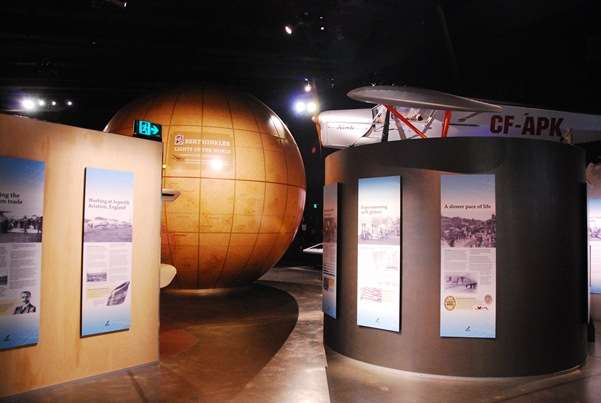
If you’re ever in Australia and you’re an Aviation History Buff, it’s worth a visit to the Hinkler Hall of Aviation. Also, see more at Queensland Holidays and In the Cockpit: Inside 50 History-Making Aircraft.
For more plane stuff, check out:
- Richard Branson launches new airline to North Korea!
- The Plane Finder – When It Goes Wrong!
- Private Jets – What I’d Like To Say If I Ever Set Foot on One!
- Airline News – When The Media Gets It Really Wrong!
- The Mile High Club – How To Join It!
- Plane Spotting! Like Train Spotting, but for Planes!
- Flight Delays & Status – How To Amuse Yourself at the Airport!
- Plane Crashes and Incidents For Those Who Fear Flying
- Duct Tape Uses – Fixing an Aeroplane!
- Jet Lag Symptoms and Recovery – The Shonky Version
- How To Find Cheap Flight Tickets. The Stupid Way.
- Aircraft Passenger Seat Types – The Worst Ones To Sit Next To!
- Flight Status Updates We’d Love To See!
- Emirates A380 First and Business Class – The Best Way To Fly! Ever!
- Flight Attendant Announcements – Some Funny Airline Safety Scripts We’d Love To Hear!
- Airline Passenger Boredom – Ransom Note Letters
- How To Earn Frequent Flyer Points – Travel Hacking Genius!
- Air Crash Investigations (Mayday) – ‘Funniest’ Accident Episodes
- Boeing 787 Dreamliner Test Plane – Experimental!
- Murphy’s Laws For Frequent Flyers
- Airport People at FreakJet.com. Like People Of Wal Mart When Flying!
- Flat Bed Seats on Air Asia Airlines – Try an Upgrade From Cattle Class
- Airline Safety Card – Alternative Meanings For Their Images
- Ryan Air – 10 Potential Benefits of Standing Up On Their Planes

i have in my possession a photograph of hinklers arrival at footscray park , flemington racecourse ,as part of the australian tour after his solo flight from england to australia , does it have any financial value and if so , what sort of figure may we be looking at ?
Who knows? Maybe. The Hinkler Hall of Aviation might be able to tell you.